Your impressions are up. Your clicks are down. Nothing about your website changed.
That used to mean you slipped down the page. It now has a second explanation, and the two call for completely different responses.
This guide assumes you have split your search traffic into brand and non-brand. If not, start with Brand vs Non-Brand in Organic Search, because everything below concerns the non-brand half.
What AI Overviews changed
The answer now sits on the results page and takes the non-brand click with it.
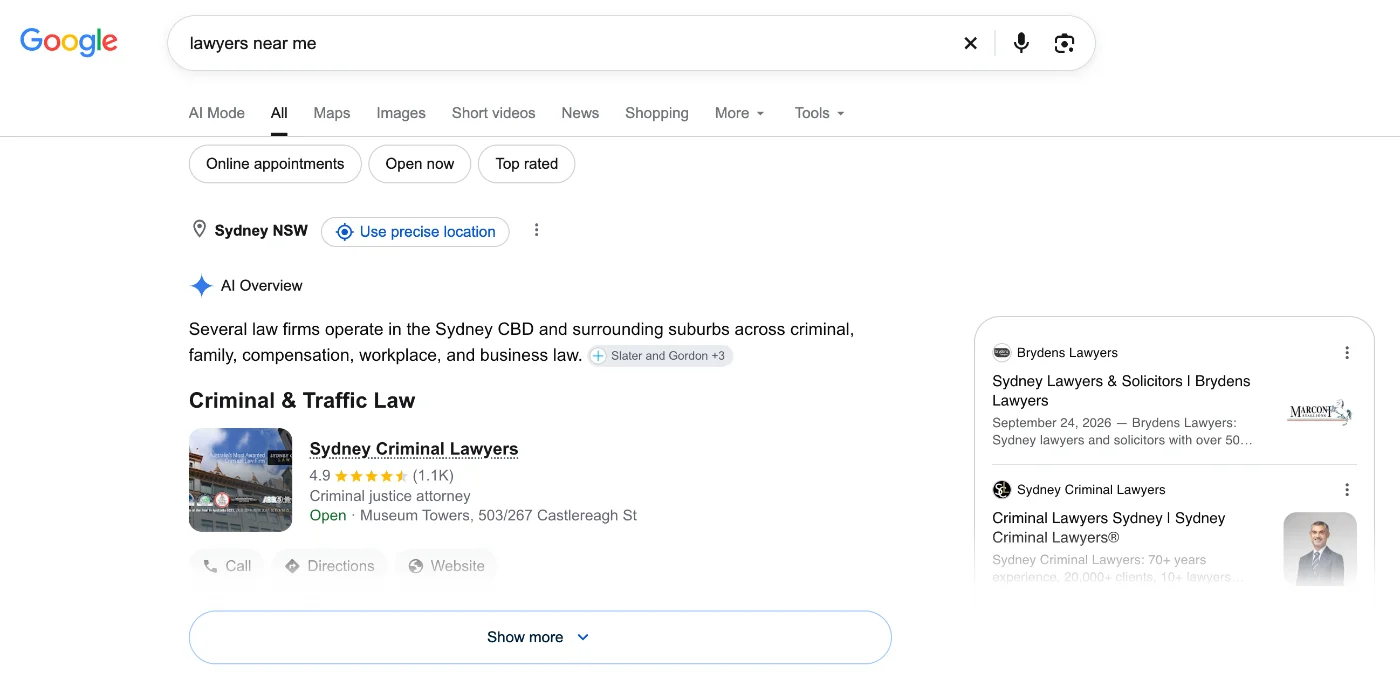
An AI Overview is Google answering the question itself, above any link. It appears most often on the informational queries that make up your non-brand half. "How much does a retaining wall cost", "how often should I service a heat pump", "what is the difference between X and Y".
Your page can still be cited in the answer, and you still get the impression. But the searcher reads the answer and never clicks.
Brand queries are largely untouched, because someone searching your company name is not asking a question Google can answer for them. They want you, and they click through. So the two halves move apart.
Figure 1. Which searches Google answers itself
The more a search is a question, the more often an AI Overview takes the click.
Informational
how much does a retaining wall cost
AI Overview: most often
The answer is on the page. The click goes first.
Non-brandCommercial
best heat pump installer near me
AI Overview: often, and rising
Google names a shortlist. Clicks go to the names in it.
Non-brandTransactional
book a heat pump service
AI Overview: sometimes
They still click through to book or buy.
Non-brandNavigational
your business name
AI Overview: rarely
They want you, and click straight through.
BrandIn your report, this is confusing. A rising brand share and a growing impression count normally mean good news, yet both can appear while your reach into new customers shrinks. The tell is the gap between non-brand impressions and non-brand clicks. If it is widening, you are being shown and not chosen.
The same widening gap has a more ordinary cause: you rank on page two, or your title and description do not match what was asked. Both are worth fixing and look identical in the totals, which is why the split comes first.
The LLM blind spot
Discovery is moving to places that never appear in Search Console.
Off-platform discovery
The question you never see
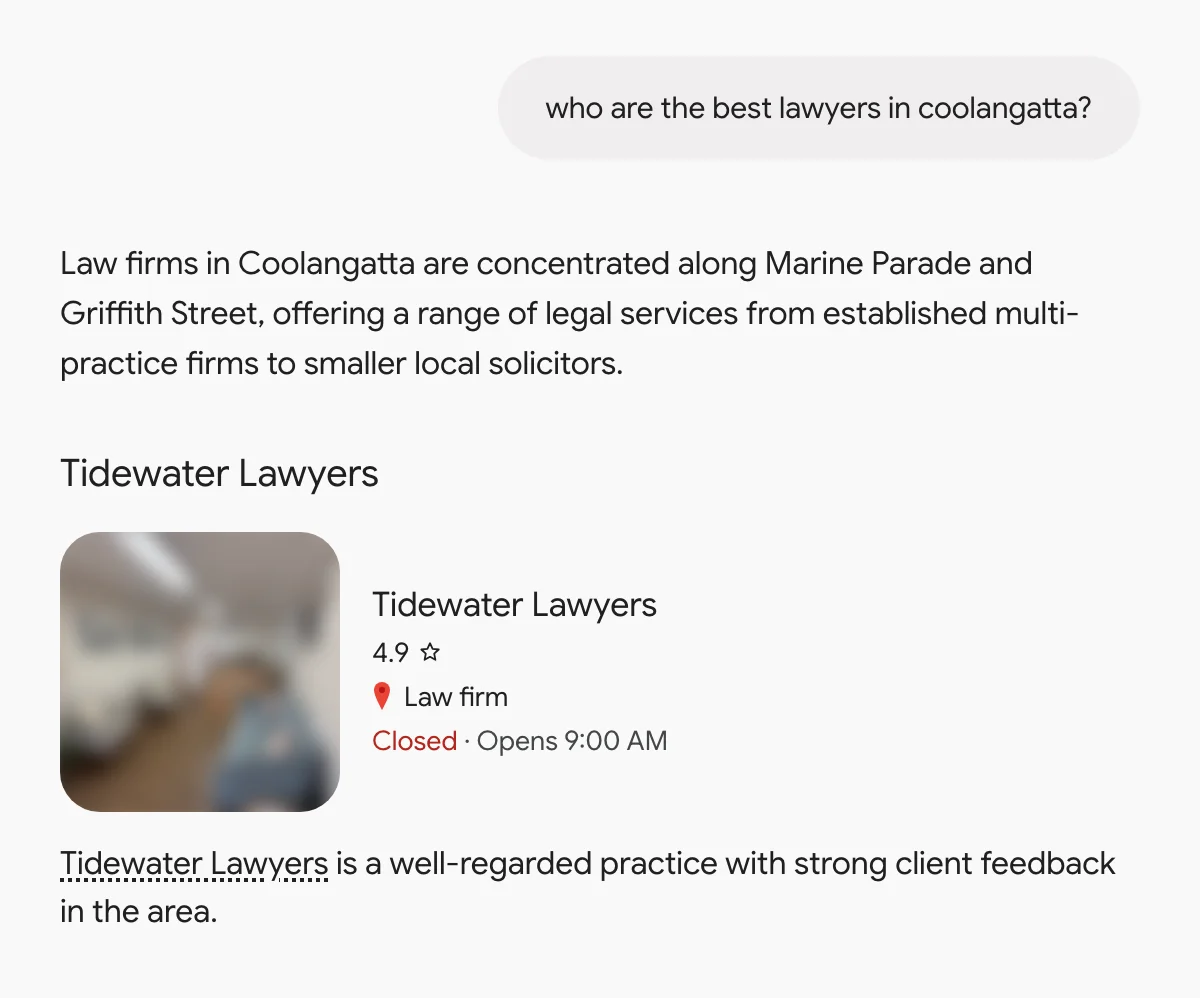
The bigger shift is outside Google. When someone asks ChatGPT, Claude or Gemini "who should I use for commercial landscaping in Auckland", that is a non-brand query in every sense that matters to your business. It never touches Search Console: no impression, no click, no row in any report you own.
What often happens next: they get two or three names, and Google one of them. That search arrives in your report as brand.
Figure 2. Where the discovery went
The non-brand step moved off-platform and arrives labelled brand.
A need, no name
"Who does commercial landscaping in Auckland?"
Asks an assistant or reads the AI Overview
Two or three businesses named.
Invisible to youGoogles the name
"Lou's Landscaping reviews"
Counted as brandClicks, and enquires
Brand search gets the credit.
Counted as brandThe discovery that won this customer happened at step 2, where you have no measurement. Your report sees a brand search and a conversion, and reasonably concludes your brand is strong.
This changes what brand search means. It used to be a clean read on existing reputation: people who already knew you. Increasingly it is also where people arrive who learned your name thirty seconds earlier from a machine.
You cannot separate those two groups inside Search Console, and should doubt any tool that claims to. Instead, treat brand search volume as a recommendation signal rather than a performance one. If brand searches climb while your advertising, PR and customer count are flat, something is putting your name in front of people. Investigate it rather than congratulating yourself.
A practical consequence: the pages that get you recommended by an assistant are the same clear, specific, useful pages about the problem you solve that used to earn non-brand clicks.
“We know we're showing up as a brand on ChatGPT and Gemini: it's just hard to measure reliably.”
Clearly co-founder, Founder at Colab Cohorts

What to do about it
Four changes to how you read the report.
-
1
Watch the non-brand impression to click gap.
Widening means you are shown and passed over. It is the most useful number to add to a monthly search report.
-
2
Check whether the affected queries are question-shaped.
AI Overviews appear most on informational queries, and more and more on commercial and local ones. Search a few yourself.
-
3
Treat brand volume as a recommendation signal.
Rising brand search with flat advertising and customer count usually means something is putting your name in front of people. Find out what.
-
4
Keep writing the specific, useful pages.
Content that earns a citation is content that used to earn the click. The click may not arrive, but the citation does, and the brand search follows.
The takeaway
Being shown and being chosen have come apart, and your report only counts one of them.
AI Overviews and assistants have made the split more useful and harder to read. Non-brand clicks are getting scarcer without non-brand demand disappearing, and some of it now arrives labelled brand.
The businesses that read this correctly split the two, watch the gap between being shown and being chosen, and treat a rising brand share as a question rather than an achievement.
In Clearly: the Search Console page in every report splits brand from non-brand automatically and shows impressions next to clicks for each half, so a widening gap is visible without you going looking for it.
